Definition and Scope of Digital Marketing: A Complete Guide
In the modern digital era, businesses rely heavily on online platforms to connect with their customers. Digital marketing has become one of the most powerful tools for brand growth, customer engagement, and sales. This blog explains the definition, scope, principles, and advantages of digital marketing, making it easy to understand for beginners and business owners.
What Is Digital Marketing?
Digital marketing refers to the promotion of products or services using digital channels such as search engines, websites, social media platforms, email, and mobile applications. It allows businesses to reach their target audience online, where people spend most of their time today.
Unlike offline methods, digital marketing provides real-time interaction, data tracking, and measurable results.
Origin of Digital Marketing
The origin of digital marketing dates back to the 1990s, when the internet became publicly accessible. The first search engines, email marketing, and websites laid the foundation for online promotion.
With the rise of Google, social media platforms, smartphones, and e-commerce, digital marketing evolved rapidly. Today, it is an essential part of every business strategy worldwide.
Digital marketing vs Traditional marketing
Online platforms (Google, social media, websites) Offline platforms (TV, radio, newspapers) Cost-effective and measurable Expensive and difficult to measure Targeted audience reach Mass audience targeting Real-time performance tracking Limited tracking Two-way communication One-way communication
Digital marketing offers flexibility, personalization, and better ROI compared to traditional marketing.
Core principles of Digital marketing
The success of digital marketing is based on a few core principles:
Audience targeting – reaching the right people at the right time
Content value – providing useful and relevant information
Consistency – maintaining regular brand communication
Data-driven decisions – using analytics to improve performance
Customer-centric approach – focusing on user experience
Scope of digital marketing
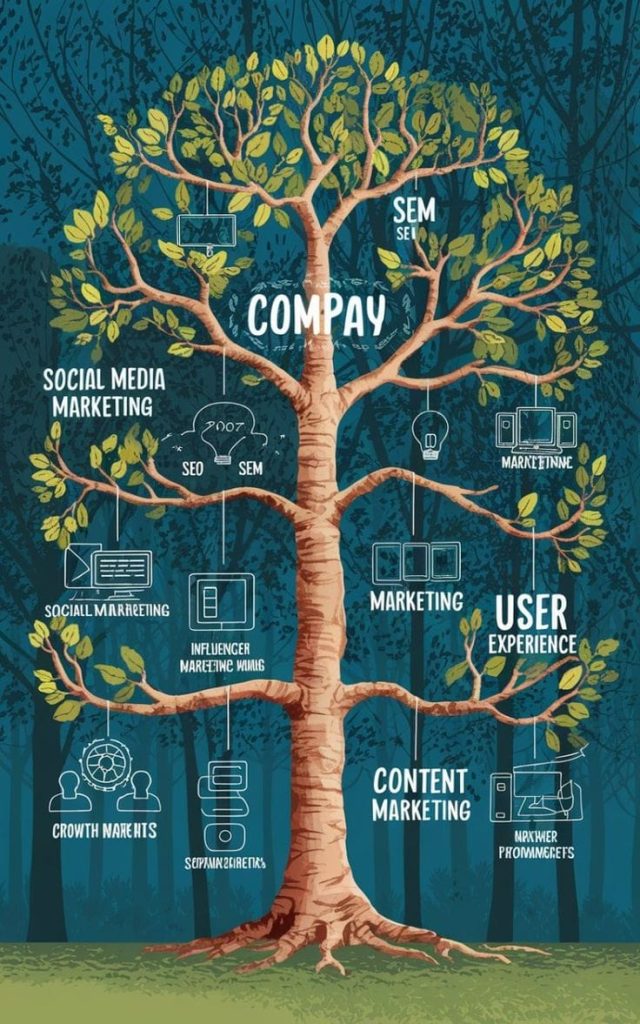
The scope of digital marketing is vast and continues to expand. Key areas include:
Search Engine Optimization (SEO)
Social Media Marketing (SMM)
Content Marketing
Google Ads and Paid Advertising
Email Marketing
Affiliate Marketing
Influencer Marketing
Local SEO and Mobile Marketing
Digital marketing offers opportunities for businesses, freelancers, startups, and agencies.
Advantages of digital marketing
Digital marketing provides several benefits, including:
Global and local reach
Better brand visibility
Targeted marketing campaigns
Measurable performance
Higher return on investment (ROI)
Faster customer acquisition
Cost efficiency
Digital marketing is more cost-efficient than traditional marketing. Small businesses can start campaigns with minimal budgets and scale as they grow. Platforms like SEO, social media marketing, and email marketing offer high returns at lower costs.
Businesses can also optimize campaigns based on real-time performance, reducing wasted spending.
Customer engagement in digital marketing
Digital marketing is more cost-efficient than traditional marketing. Small businesses can start campaigns with minimal budgets and scale as they grow. Platforms like SEO, social media marketing, and email marketing offer high returns at lower costs.
Businesses can also optimize campaigns based on real-time performance, reducing wasted spending.
Conclusion
Digital marketing has transformed the way businesses connect with customers. With its wide scope, cost efficiency, and strong customer engagement, it has become an essential part of modern business strategy.
Whether you are a business owner or a beginner, understanding digital marketing helps you stay relevant and competitive in today’s digital world.